01 /
Powders
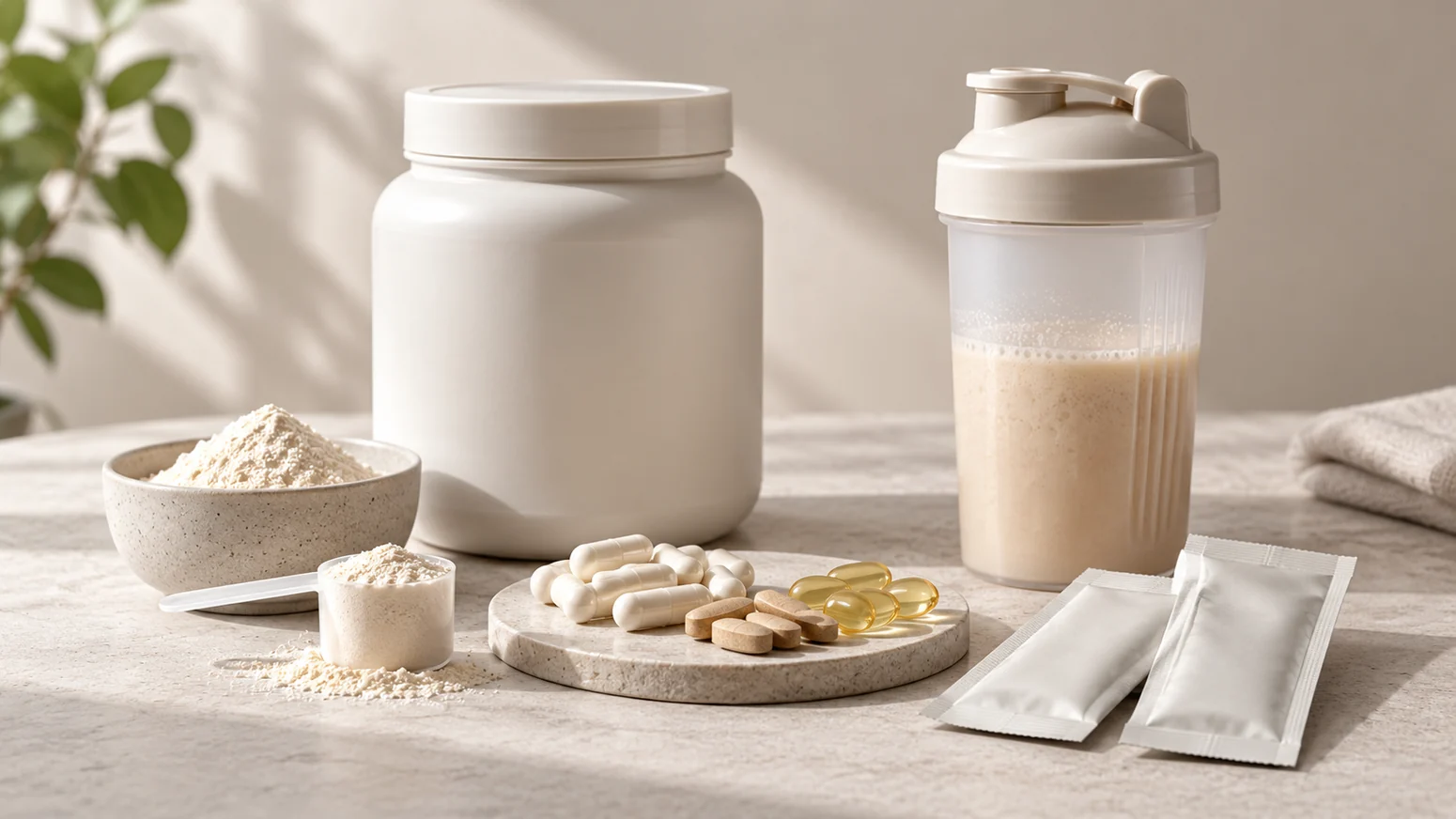
Often supplied in tubs or sachets, powders may be mixed into drinks or prepared in other ways. A scoop size and a stated portion are details to read, rather than assume.
A CLEAR PLACE TO BEGIN
What are sports supplements, and why do people talk about them? Explore the essentials with straightforward explanations, from familiar products to unfamiliar terms and claims.
Informational reading · No product sales or endorsements

No previous knowledge needed.
Context before claims.
Plain-language explanations.
THE STARTING POINT / 01
Sports supplements is a broad everyday expression for products discussed in connection with exercise and active lifestyles.
Depending on the context, the term may describe food supplements or other specialist nutrition products marketed to people who enjoy sport. It does not refer to one standard ingredient, formula or type of packaging. Two products may look alike on a shelf while being quite different once you read their descriptions.
Some products appear in measured formats such as tablets and capsules. Others are sold as powders or prepared drinks. The format is only one feature; understanding what an item is begins with its full description and the information provided on the label.
FORMATS / 02
Packaging can tell you how an item is presented. It cannot tell the complete story of its contents or suitability.
Often supplied in tubs or sachets, powders may be mixed into drinks or prepared in other ways. A scoop size and a stated portion are details to read, rather than assume.
These are measured units that can be easy to recognise. The number of units in a container and the contents per unit are different pieces of information.
Pre-mixed drinks and convenient formats appear in sports nutrition discussions too. Their ingredients and reference amounts still need to be read on their own terms.
These descriptions explain common presentation formats; they are not instructions or recommendations to consume any product.
THE BIGGER PICTURE / 03
Sports nutrition is also about ordinary foods and drinks, everyday routines and how people fit meals around different kinds of activity. A product label describes an item, not someone's entire pattern of eating.
People have different schedules, food preferences, budgets and levels of activity. Learning about supplements does not mean that a particular product is required for anyone who exercises. Starting with the wider context makes unfamiliar product language easier to understand.
How supplements fit into sports nutritionREADING A PACK / 04
Packaging often combines practical information with promotional design. These four areas can help you distinguish a product's description from its headline.
Learn the vocabularyFind out what the item is, rather than relying only on an attractive product name or a shelf category.
Read the full ingredients information and any relevant allergen statements instead of focusing on one highlighted component.
Check whether a figure refers to 100 g, 100 ml, a unit or a manufacturer-defined portion.
Storage instructions, relevant precautions and business contact information are also part of a complete label.
WORDS MATTER / 05
Small differences in wording change what a reader can reasonably take away.
A description explains a product's composition or format. You can usually check it against the pack and its full product information.
A review can describe someone's experience, but one story does not establish the same outcome for every reader.
Statements about results, especially sweeping guarantees, require careful scrutiny and appropriate support.
An attractive design, a familiar phrase or a large number of reviews is not a substitute for evidence.
FINDING INFORMATION / 06
Sports supplements appear in shops, articles, short videos, adverts and conversations. Each source has a different purpose. A retailer describes something for sale; a reviewer shares an experience; a public information service should make its sources and limits clear.
Look for the author or organisation, the date, the original reference and any commercial connection. A claim is easier to assess when you know exactly what it says and who is responsible for it.
How to check your sources
A SIMPLE WAY TO LEARN / 07
Look for an ordinary definition before reading about outcomes or popularity.
Identify the ingredients, quantities and basic presentation details.
Distinguish a description, independent guidance and advertising.
Notice where information is general and where individual circumstances would matter.
COMMON QUESTIONS / 08
Short answers to points many new readers wonder about. Our extended guides go into more detail.
No. It is an umbrella term used for a variety of products discussed in sport and active living. The individual label matters more than the broad category name.
No such general conclusion follows from being physically active. Products are only one part of the discussion, and individual circumstances differ. Our articles explain the subject without making personal recommendations.
A review describes a person's experience or opinion. Evidence used to support a general factual claim needs suitable methods and context. The two should not automatically be treated as equivalent.
Packaging can provide important details, including ingredients and reference amounts. It does not explain a whole diet or predict an individual's experience.
No. This is an informational website with general educational articles. We do not sell, rank or endorse specific products.
FURTHER READING / 09
Now that you have the background, choose the topic that interests you and read at your own pace.
Browse the article library
An approachable introduction to what sports supplements are, where you might see them and why people talk about them.
Read guide
See how supplements relate to everyday meals, routines and the wider picture of an active lifestyle.
Read guide
Straightforward answers to questions that often come up when exploring supplements for the first time.
Read guide
Understand the everyday words found in articles, on packs and in conversations about sports nutrition.
Read guide
A clear, balanced introduction to supplement categories, common formats, product descriptions and everyday questions.
Read guide
A practical guide to examining sources, recognising promotional language and asking useful questions.
Read guide