Everyday context7 min read
Where Supplements Fit Into Sports Nutrition
See how supplements relate to everyday meals, routines and the wider picture of an active lifestyle.
Read guideAn approachable introduction to what sports supplements are, where you might see them and why people talk about them.

Sports supplements can seem like a whole world of their own. Colourful packaging, unfamiliar words and plenty of competing opinions can make even a simple question feel complicated. This guide starts with the big picture.
In everyday conversation, sports supplement is a broad label used for food supplements and related products marketed to people interested in sport or physical activity. It is not the name of one ingredient or one standard recipe. Products placed under this umbrella can look similar on a shop shelf while containing very different things.
Food supplements are generally products intended to supplement the normal diet and are often sold in measured forms, such as capsules, tablets or powders. Not every product associated with training is necessarily classified in the same way: an ordinary snack, a fortified food and a food supplement may have different descriptions and labelling requirements.
The word “supplement” is especially easy to misunderstand because people use it in different ways. In everyday speech it might refer to an ingredient sold in a measured form, a prepared sports drink or a specialist product seen in a fitness shop. In a regulatory setting, however, a food supplement has a more specific meaning. It helps to read a product's actual description rather than treating every item on a sports nutrition shelf as identical.
For a newcomer, three simple distinctions make the subject easier to follow: what a product contains, how it is presented and what is being claimed about it. A label may answer the first two questions, while the third may call for an independent source. These questions are useful even when you are only learning and have no intention of buying anything.
Sports supplements appear in fitness shops, supermarkets and online catalogues. They are also discussed in workout videos, social posts, magazines and conversations at the gym. Each setting has a different purpose. A shop is presenting a product; a creator may be sharing a personal experience; an information website should help explain a subject clearly.
That difference matters when reading. A product description aims to describe or sell an item, while an educational resource should make it easier to ask questions about a whole category. Neither the popularity of a post nor the size of an audience is a substitute for reliable evidence.
A supermarket may group these items with breakfast foods or drinks; a specialist shop may organise them by ingredient or format; an online publisher may group them by sport. Categories are conveniences, not proof that every item in one aisle serves the same purpose. Websites also vary: some explain terminology, some review products and others earn money when visitors follow a shopping link.
When you first encounter a new term, notice the context around it. A short video may introduce an unfamiliar name without defining it. A shop page may discuss flavour and pack size while leaving out wider background. An educational page should help connect these pieces, explain uncertainty and make the limits of its information visible.
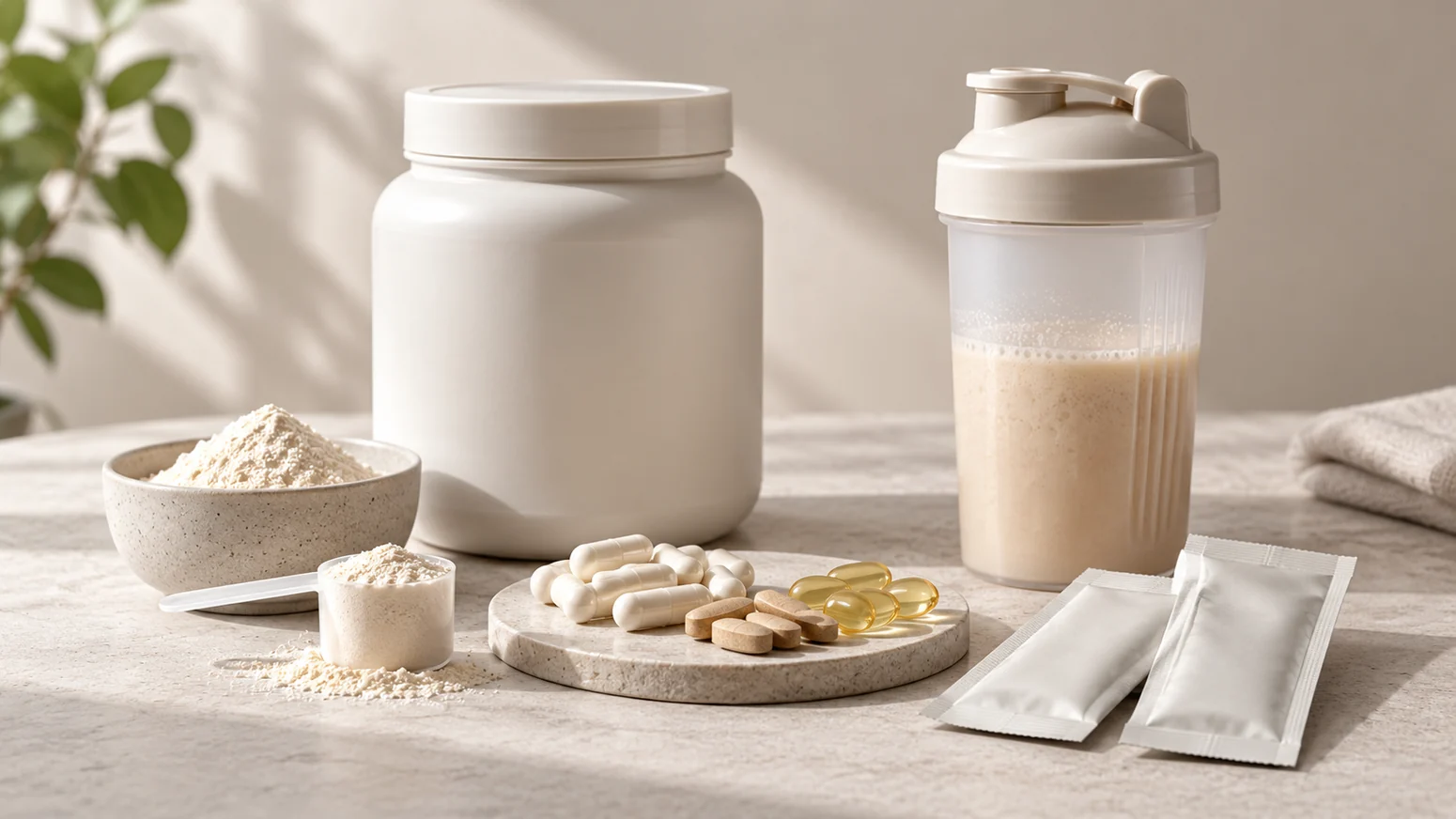
You may notice powders, capsules, tablets, liquids and ready-to-drink products grouped together. Packaging often includes a product name, an ingredient list, a quantity, serving information and instructions supplied by the manufacturer. The appearance of a pack does not establish whether two products are equivalent.
Typically measured by weight or a supplied scoop; the label explains the relevant serving.
Often counted by units; the number of capsules is different from the quantity of an ingredient.
May be sold ready-made or prepared by mixing a powder with water.
These are descriptions of packaging and presentation, not directions to use a particular product.
Products can also differ in how much preparation they involve. A tub may require a scoop, water and a shaker; another format arrives in individual sachets; a ready-made drink has already been mixed. Convenience, packaging and taste are features of presentation, not evidence that one product is universally preferable.
Pay attention to reference amounts. A label might show information per 100 grams, per unit and per suggested portion. Those figures answer different questions. A single large number printed prominently on the front is difficult to interpret until the reference quantity is clear. If you are comparing two descriptions, first check that both use the same unit and that the products are the same general type.
“Natural”, “advanced”, “professional” and “premium” are not enough on their own to tell you what a product contains or how suitable it is for someone. Similarly, a striking label or a well-known ingredient does not describe the complete formula.
It is also useful to separate a product’s popularity from the role of food, rest and training. A balanced approach to an active lifestyle covers much more than items sold as supplements. Our guide to the wider sports nutrition picture looks at that context.
Another common assumption is that sports supplements must be necessary for anyone who exercises. In reality, physical activity includes everything from a short walk to organised competition, and the surrounding food routines can look very different. Learning about a product does not create an obligation to use it. A clear information site should leave readers free to reach their own informed conclusions rather than presenting shopping as the next unavoidable step.
It is worth keeping product claims separate from general wellbeing advice, too. A product description is not a plan for eating, training, sleeping or managing a health condition. Anyone with questions involving medicines, pregnancy, allergies or a diagnosed condition should seek individually appropriate professional advice.
Think of sports supplements as a varied group of products and discussions rather than a single solution or routine. Learning what the words mean, checking who is making a claim and noticing how something is presented are sensible starting points.
If you meet an unfamiliar term, turn to our beginner’s glossary. You do not need to learn everything at once to become a more thoughtful reader.
A practical way to begin is to note an unfamiliar word, find its plain-language definition, read the complete context and compare the explanation with a reliable second source. You might write down whether the source is describing an ingredient, a packaging format, a legal category or someone's experience. Those are different kinds of information, and separating them makes future articles much easier to read.
Our questions and answers cover points that new readers often raise. If you would rather see how the subject connects with everyday meals and sport, continue to the wider nutrition picture.
This guide offers general educational information. It does not recommend particular products or replace professional advice tailored to your circumstances.
KEEP READING
See how supplements relate to everyday meals, routines and the wider picture of an active lifestyle.
Read guide
Straightforward answers to questions that often come up when exploring supplements for the first time.
Read guide
Understand the everyday words found in articles, on packs and in conversations about sports nutrition.
Read guide